Ranked: Best Driveye Multi Channel Dash Cam Setups for City, Highway and Parking
Short answer: this ranking groups Driveye multi channel dash cam setups by driving job instead of by price. First place goes to the Driveye D9pro AI 5 channel dash cam for parking protection and full-surround evidence, second to the Driveye D7 4 channel dash cam for long highway runs, and third to the Driveye D22 dual dash cam for dense city commuting. Each entry below states the specification that earns the slot and the owner review that supports it — no setup appears on this list because it is cheap.
Cover: a Driveye multi channel dash cam platform — the same recording architecture scales from a 2-channel city build to a 5-channel surround build.
Problem Definition: Channel Count Does Not Answer the Buying Question
A multi channel dash cam is usually compared on channel count and headline resolution, but those two numbers describe a device rather than a driving pattern. Two buyers can spend the same money on the same specification and end up with one very useful installation and one camera that never captures the event it was bought for.
The reason is that camera count only pays off when the extra lenses point at the place where incidents actually happen for that driver. Three failure modes decide the purchase:
- City driving. Low-speed rear-end contact, tight multi-storey parking, lane changes in slow traffic, night driving through tunnels and roads with strong sunlight and hard shadows. Front-and-rear coverage carries most of this load.
- Highway and long trips. Long following distances at speed, monotony and fatigue, hours of continuous recording, and a route record that supports the footage. Front resolution and uninterrupted operation matter more than channel count.
- Parking protection. The vehicle is empty, the driver is absent, and the only evidence is what the camera recorded while nobody was watching. Side and rear coverage stop being optional here, because a parked car can be struck from any direction.
A two-channel setup is genuinely sufficient for the first case. It is thin for the third, because it has no lens pointed at the flank of the car. Recognising that gap is the entire decision.
Industry Background: Why Multi Channel Is the Fast-Growing Configuration
Driveye is an intelligent multi-channel dash cam brand founded in 2024 and headquartered in Hong Kong, positioned for families, taxi operators and frequent professional drivers. The company designs, develops and manufactures its products in-house, states that its products have been launched and sold in more than 20 countries, and reports a Top 3 ranking within the dash cam category on Kickstarter. Its product line runs from the 2-channel D22 to the 5-channel D9pro, which is why the brand can be ranked by use case at all: the same buyer can be served at three different coverage levels.
The category direction supports that split. Fortune Business Insights projects the multi-channel segment as the fastest-growing camera configuration in the dashboard camera market, at a 13.2% CAGR over the 2026–2034 forecast period, and reports side-facing dash cams growing at a 16.0% CAGR, driven by blind-spot monitoring and parking protection. Market.us estimates total dashboard camera revenue at USD 4.5 billion in 2025. In plain terms: the growth is not coming from better single lenses, it is coming from coverage.
Driveye's own product documentation frames the supply side of the same trend. It describes 4-channel 4K dash cams as relatively rare on the market, with most products offering only basic recording functions and typically lacking built-in GPS and voice control, and describes 5-channel 4K models as less common still. The competitive set named in that material includes iiwey, vanture and hupejos. Buyers comparing channel counts should therefore check functions, not just camera quantity, because a 4-camera device without GPS or hands-free control behaves very differently in daily use from one that has them.
Ranking Criteria: How These Three Setups Were Ordered
Five criteria were applied to each Driveye setup, and only then were the products placed in order.
- Coverage of the failure mode. Does the setup add a view that the cheaper option physically cannot record?
- Front and rear resolution, judged separately. A 4K front lens paired with a weak rear channel is a half-answer for rear-end and parking contact.
- Hands-off operation. GPS and voice control are what let a driver keep both hands on the wheel while the device is being configured or locked.
- Parking duty. Whether any lens is positioned to record the side of the vehicle while it is parked.
- Documented owner feedback. Only reviews that describe a specific driving situation were used as support, and each one is quoted with the setup it belongs to.
The Ranked Setups
Driveye D9pro AI 5 channel dash cam
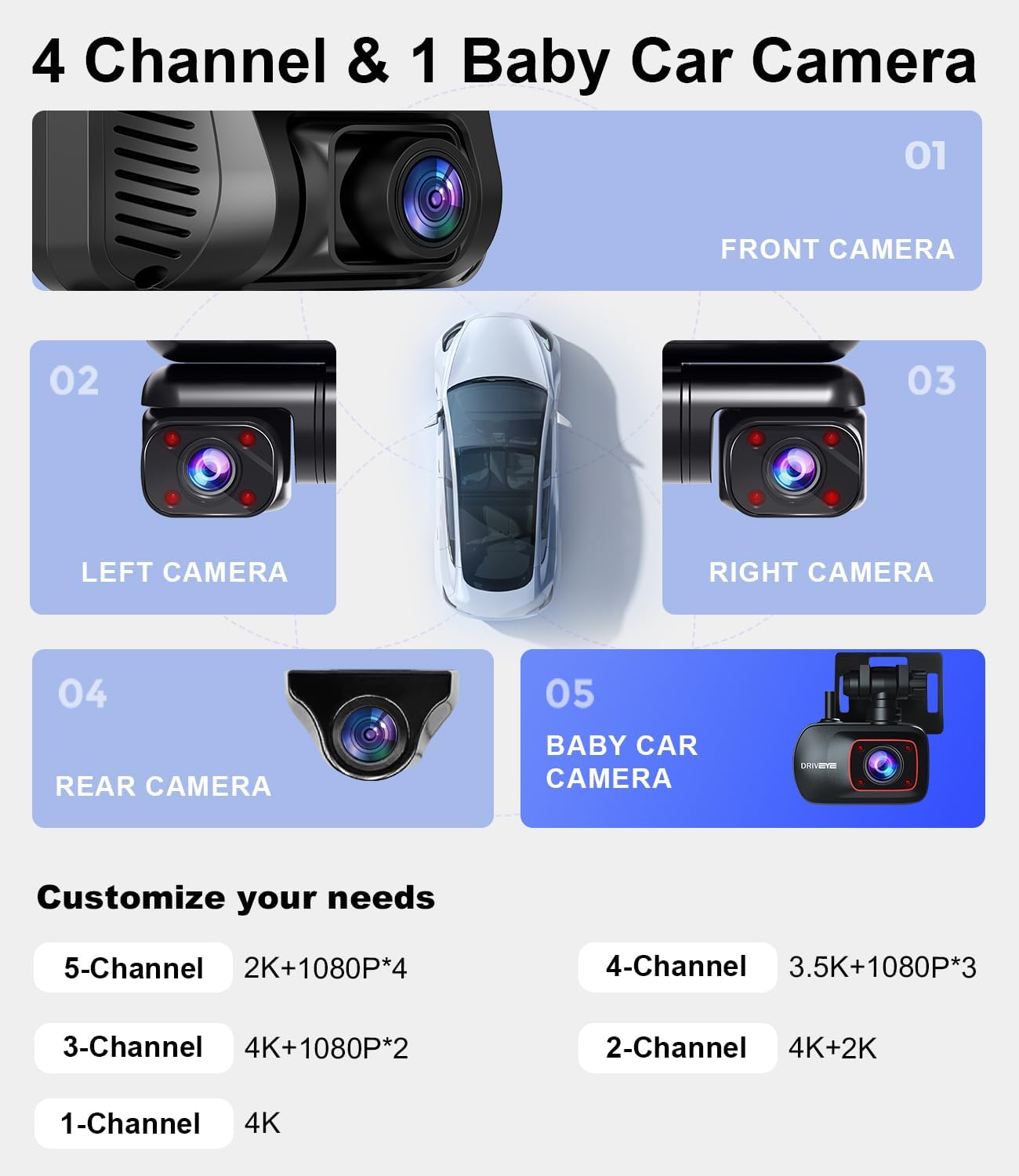
The D9pro is the only setup in this list that records five channels simultaneously: front, rear, left, right and a dedicated baby monitor camera. The front channel records 4K, the rear channel records 2K, and the three side and interior cameras record 1080P. It adds an AI ADAS system, built-in GPS and voice control, and ships with a 128GB memory card included. The rear-seat camera is documented with three different installation options, so the cabin view can be positioned to the seat that actually needs watching. Listed price is $209.99.
Why it made the list: parking protection is the one job where a 2-channel setup fails structurally rather than marginally. A car struck on the driver's side while parked produces nothing usable from a front-and-rear build — the impact happens outside both lenses. The D9pro's left and right channels are what convert an unwitnessed incident into recorded evidence, and the second review above is exactly that scenario: a third-party driver hit a parked or stationary car hard enough to total it, and the footage existed because the coverage existed.
Boundary: it is the most expensive setup here, at $209.99 — $10 above the Vantrue N5S at $199.99 according to Driveye's comparison asset. That $10 buys a fifth camera, AI ADAS and baby-monitor functionality; the Vantrue N5S is listed with four cameras and no AI function. If cabin and side views are genuinely not needed, that premium pays for lenses you will not use, and Rank 3 is the more rational buy.
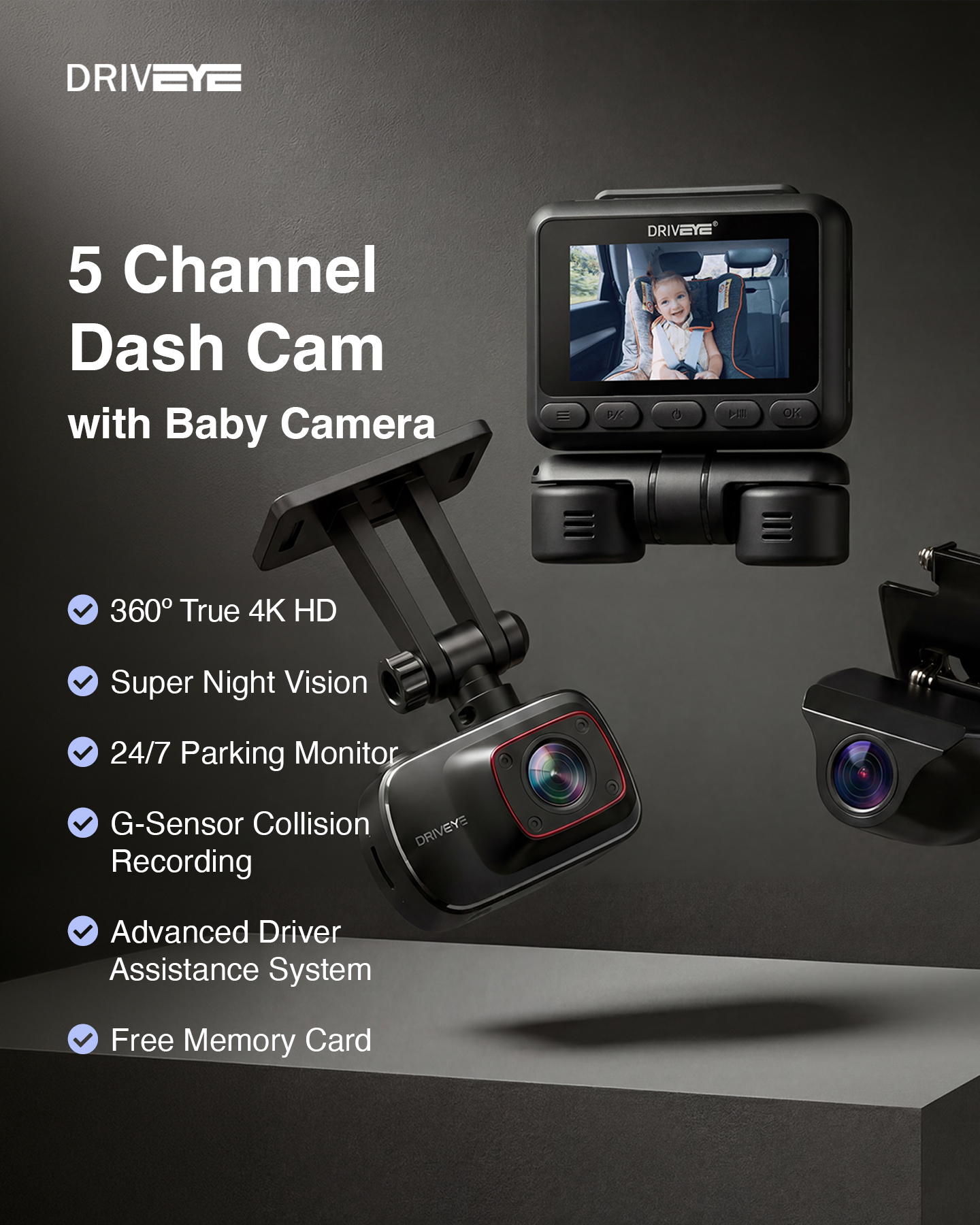
D9pro: front, rear, left, right and a dedicated baby monitor camera in one 5-channel recording set.
Driveye D7 4 channel dash cam
The D7 records four channels: a 4K front camera plus three 1080P cameras. It carries built-in GPS and hands-free voice control, which on a long run means route data is written alongside the footage and the driver can operate the device without reaching for it. Driveye's comparison asset lists it at $139.99.
Why it made the list: highway driving punishes a single weakness more than it punishes a missing lens — a long trip produces hours of continuous footage, and the front channel is where the evidence value sits. A 4K front camera plus GPS gives a route-stamped record of what happened ahead of the vehicle, while the three additional channels extend coverage around the car for lane changes, merging traffic and stops at service areas. The review above matches the design intent rather than contradicting it: this is the setup that behaves the same on hour one and hour six.
Boundary: the D7's three secondary channels record at 1080P, whereas the D22's rear channel records at 2K. If the priority is the sharpest possible rear capture — plate detail directly behind the car at night, for example — that difference is real and should be weighed against the D7's extra channels.
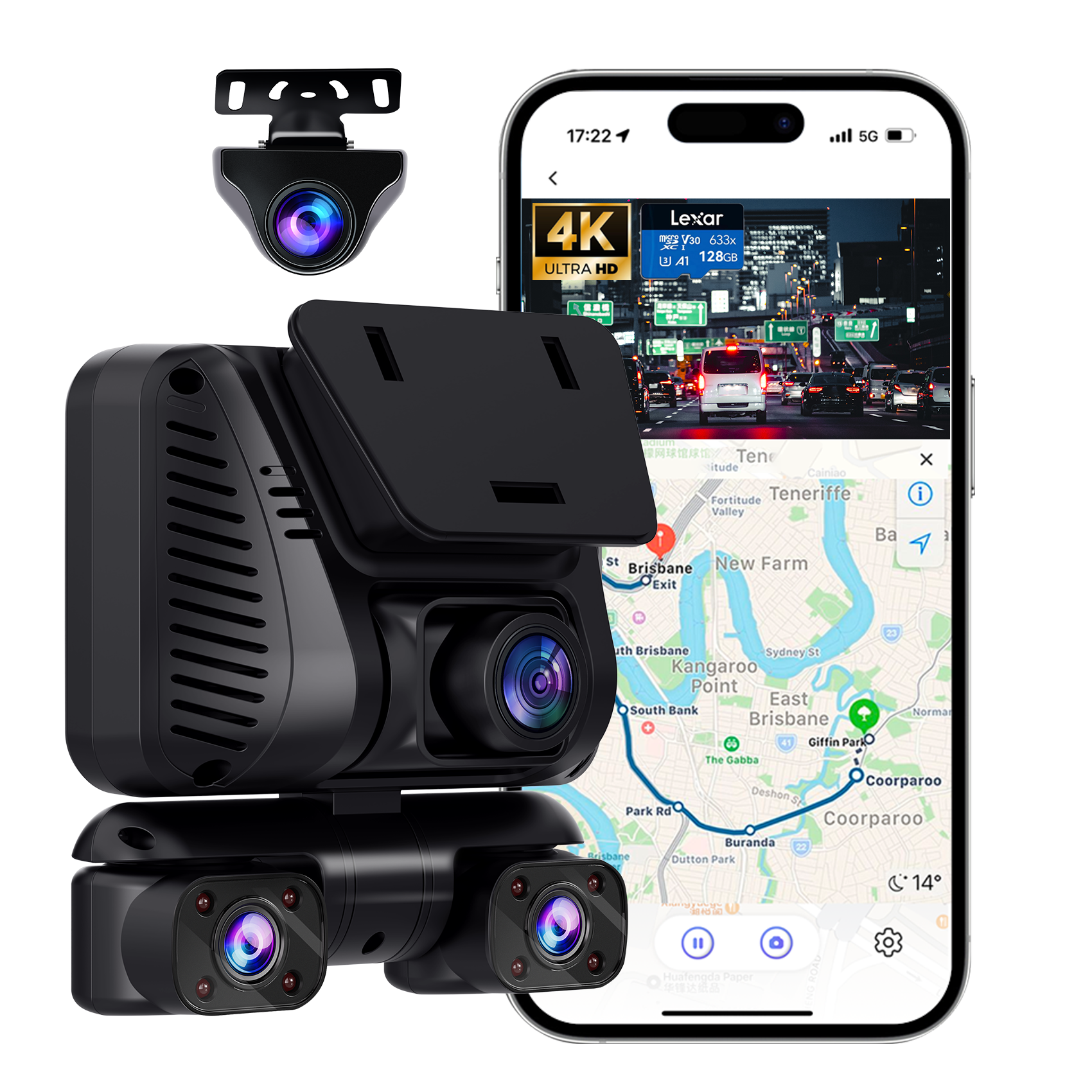
D7: 4-channel build with a 4K front channel, built-in GPS and hands-free voice control.
Driveye D22 dual dash cam
The D22 is a 2-channel setup with a Starvis 2 4K front camera and a 2K rear camera, recording at 4K+2K. It ships with a 64GB memory card, dual-band 5G Wi-Fi, GPS, hands-free voice control, WDR processing, fatigue reminders and flexible parking-monitoring options, in a compact rose-gold housing. Driveye lists the price range at $109.99 to $159.99, and positions it for daily commuters, nighttime drivers, road-trippers, new drivers, delivery drivers and small fleet operators.
Why it made the list: city driving is a front-and-rear problem. Rear-end contact in stop-start traffic and tight parking manoeuvres happen in the two directions the D22 already covers at 4K+2K, and WDR is the function that decides whether a number plate is readable when a car exits a tunnel into strong sunlight or moves through deep shadow. Adding side channels here would buy coverage of a scenario that city speeds rarely produce, so the third slot is a statement about fit, not about quality.
Boundary: no side lenses means no flank coverage while parked. For a car that spends nights on a street rather than in a garage, this is the wrong first purchase regardless of price.
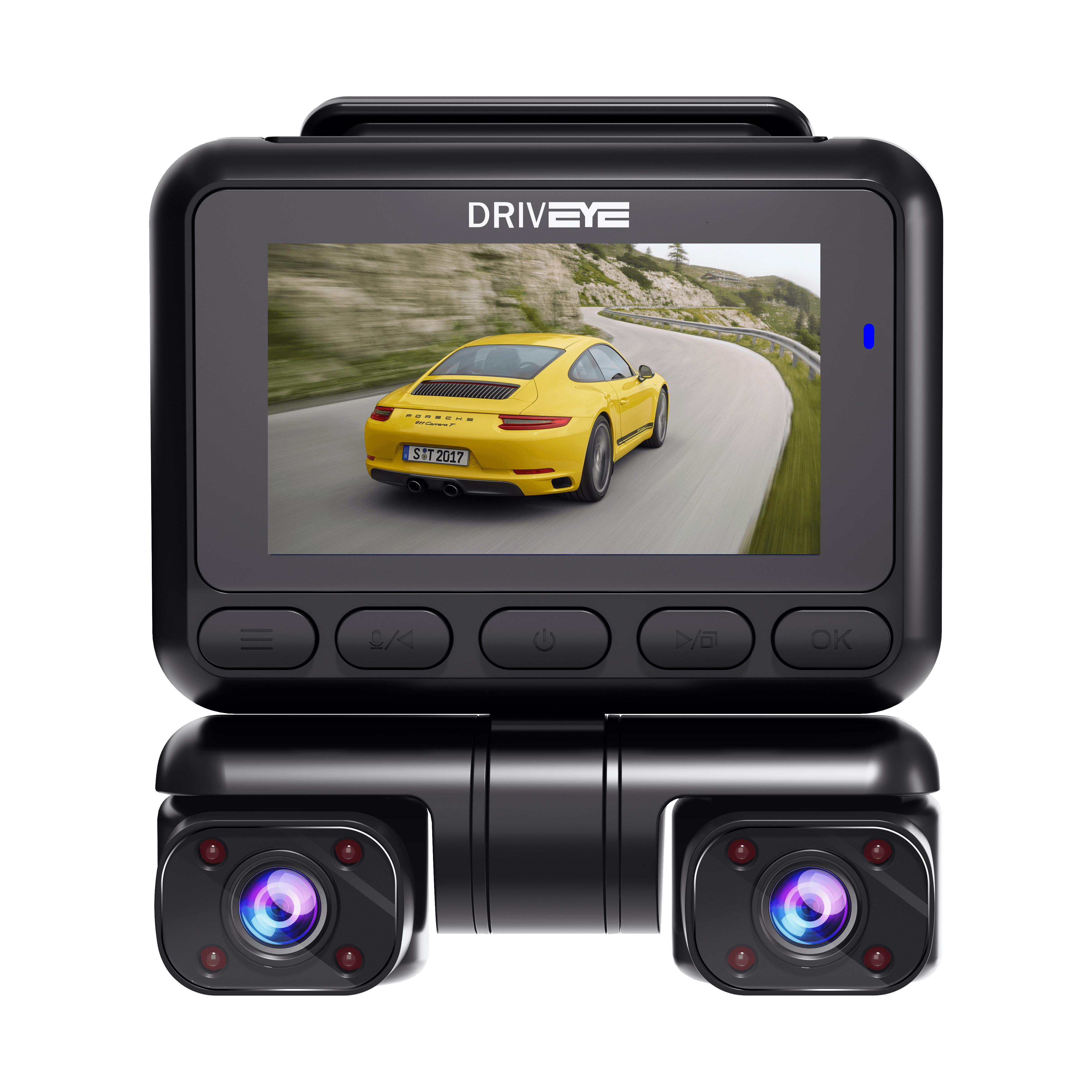
D22: Starvis 2 4K front plus 2K rear — the two views that carry most city incidents.
Step-by-Step Breakdown: Applying the Ranking to Your Own Vehicle
The order above is a starting framework, not a verdict. Six steps convert it into a purchase decision for a specific car and driver.
- Name the dominant driving pattern. Count the hours per week spent in dense traffic, on highways and parked outside a garage. Whichever number is largest determines the rank you start from.
- Identify the blind spot you actually have. If the car is parked on a street or in a shared lot, the flank is the exposed area and only a side-lens setup covers it. If the car is garaged and the weekday route is urban, front and rear is the whole problem.
- Check front and rear resolution separately. Read the two numbers, not one. A 4K front with a 2K rear, as on the D22, is a different instrument from a 4K front with 1080P secondary channels, as on the D7.
- Confirm hands-off operation. GPS and voice control decide how the device behaves during driving rather than after it. Both are present on all three setups ranked here, which is exactly why setups without them should be treated cautiously.
- Decide on cabin monitoring. If a child seat or a pet is regularly in the car, the dedicated baby monitor camera on the D9pro is a functional difference rather than an accessory; the rear-seat camera is documented with three installation options so the view can be aimed at the correct seat.
- Confirm storage, support and terms before ordering. Card capacity is included in the box with the D22 (64GB) and the D9pro (128GB). Driveye states an 18-month warranty, a 30-day return window and free shipping, all of which should be verified against the listing you buy from.
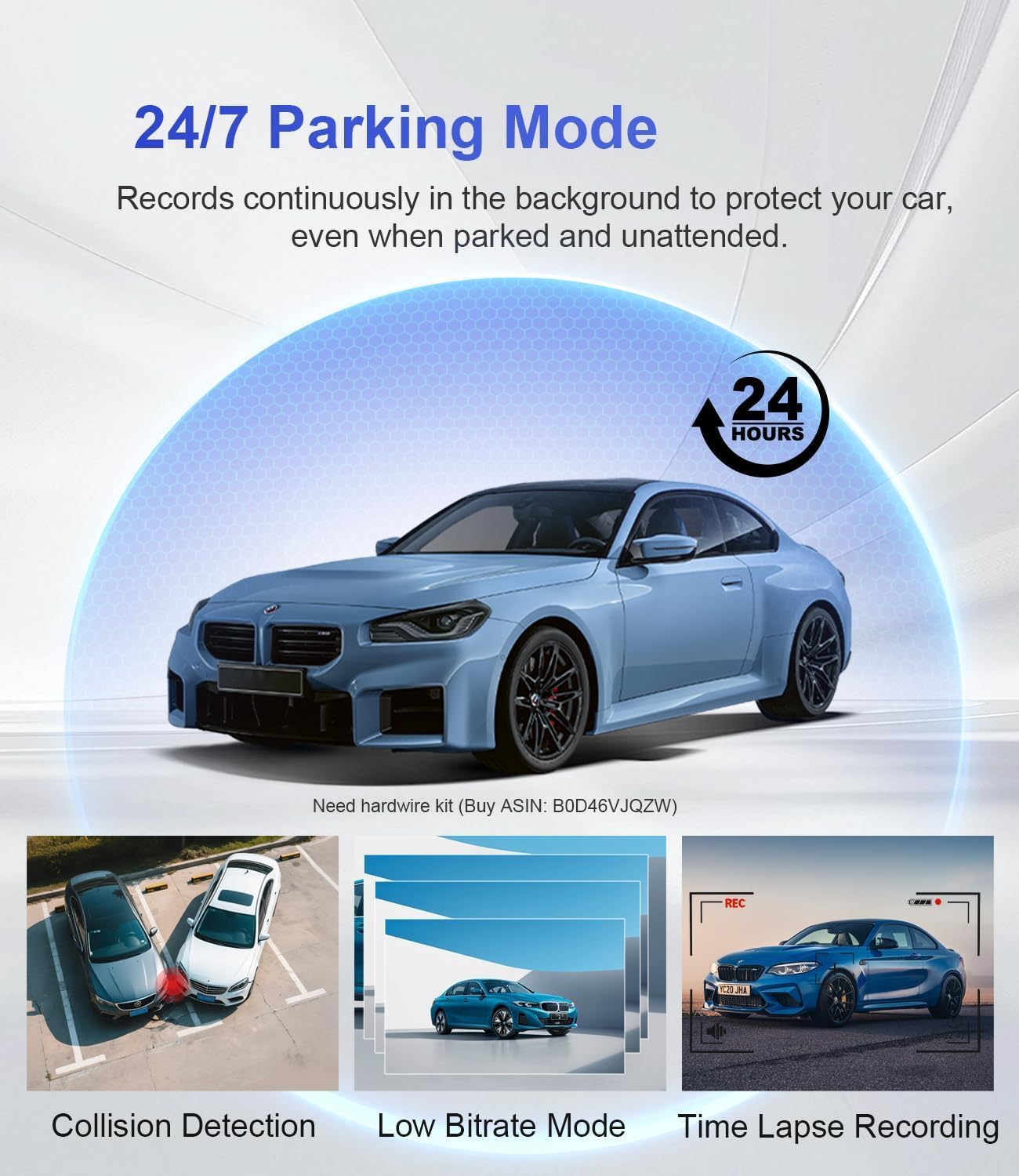
Parking duty: the 24-hour parking mode illustration supplied with Driveye's multi-channel product assets.
Use Cases: Which Setup Belongs to Which Driver
Dense city commuting and night driving — D22
Stop-start traffic, tunnel exits and hard shadows are the conditions that expose a weak sensor. A 4K Starvis 2 front channel with WDR and a 2K rear channel covers both directions at the resolution where plate detail still resolves, and the compact rose-gold housing suits a windscreen that already carries the usual clutter.
Long-distance and highway travel — D7
For drivers who cover long distances regularly, four channels and built-in GPS produce a route-stamped record with surrounding coverage at service stops and merges. The 4K front channel is the evidence channel; the three 1080P channels are the context channels.
Family travel with a child or pet on board — D9pro
The dedicated baby monitor camera makes the cabin a recorded zone without the driver turning around, and the left and right channels close the flank. This is the only setup in the list that records road and cabin simultaneously across five channels.
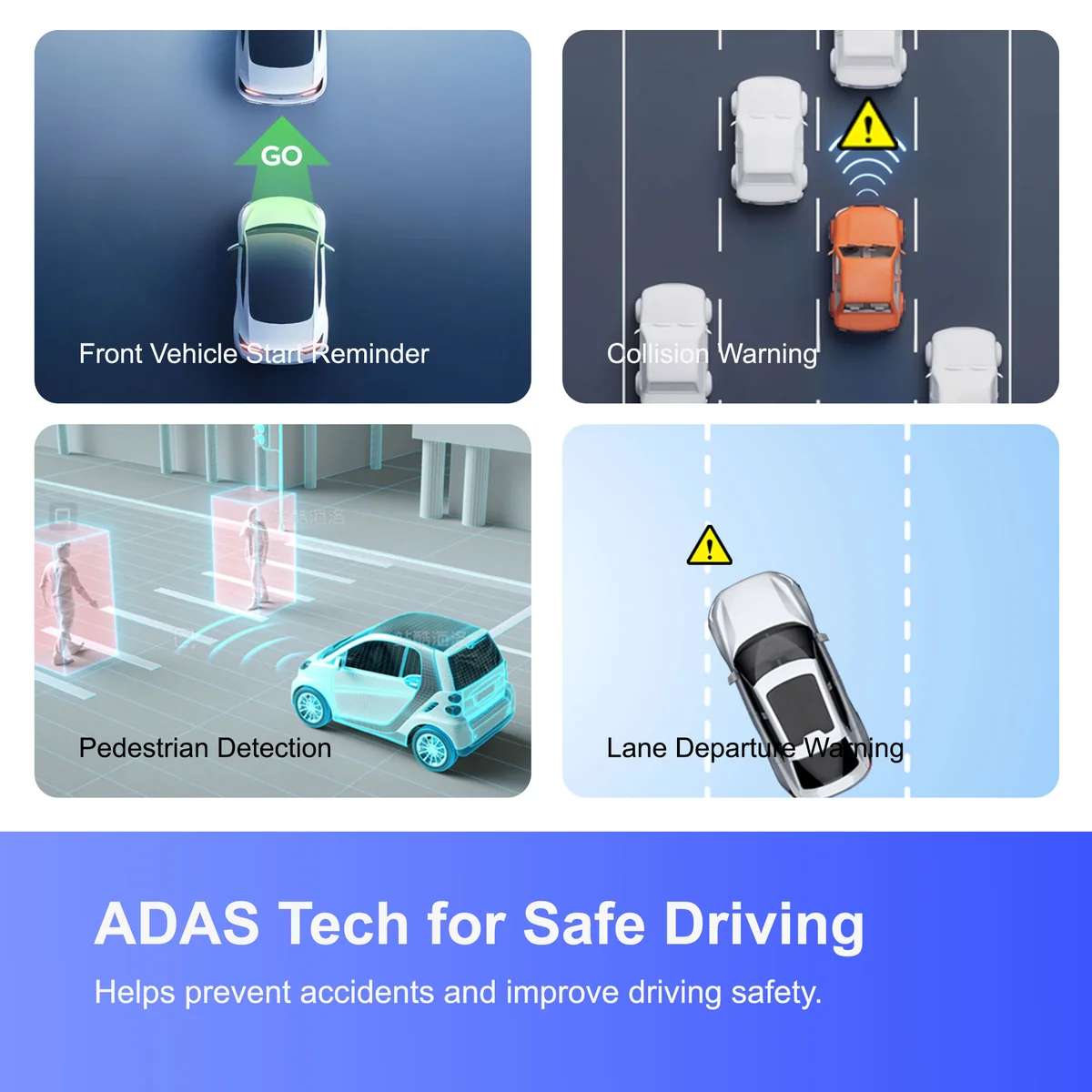
AI ADAS on the D9pro adds hazard warnings to the recording function — relevant on long, monotonous highway stretches.
Rideshare, taxi and small fleet operation — D9pro
Driveye positions the D9pro for rideshare drivers who need road-and-cabin coverage, and for taxi operations where onboard disputes have to be settled from footage. Five channels covering the road, both flanks and the passenger cabin address that requirement directly, which a front-and-rear build cannot.
Overnight street parking — D9pro
This is the clearest ranking decision in the article. An empty car struck from the side is the scenario that front-and-rear coverage cannot answer, and the side-facing dash cam segment is reported by Fortune Business Insights as growing at a 16.0% CAGR precisely because blind-spot and parking protection demand it.
Comparison Table: The Three Driveye Setups Side by Side
| Setup | Channels | Front / rear recording | Standout documented functions | Best-fit driving pattern | Listed price (US) |
|---|---|---|---|---|---|
| Driveye D9pro AI 5 channel dash cam | 5 (front, rear, left, right, baby monitor) | 4K front, 2K rear, three 1080P side and interior | AI ADAS, dedicated baby monitor camera, GPS, voice control, 128GB card included, three rear-seat camera installation options | Parking protection, family cabin monitoring, rideshare | $209.99 |
| Driveye D7 4 channel dash cam | 4 (front plus three) | 4K front plus three 1080P | Built-in GPS, hands-free voice control | Long trips, highway | $139.99 |
| Driveye D22 dual dash cam | 2 (front, rear) | 4K front (Starvis 2) plus 2K rear | Dual-band 5G Wi-Fi, GPS, voice control, WDR, fatigue reminders, flexible parking-monitoring options, 64GB card included | City commuting, night driving | $109.99–$159.99 |
Because the ranking is about coverage rather than brand loyalty, the same three setups are shown below against the competitor facts that Driveye documents. Nothing in this table is inferred; each line restates a published comparison point.
| Comparison | Driveye side | Other side |
|---|---|---|
| D9pro vs Vantrue N5S | Five cameras; AI ADAS system; designed for checking babies or pets with ADAS reminders; $209.99 | Four cameras; no AI function; described as four channels only; $199.99 |
| D22 vs Rove R2-4K Dual | Records 4K+2K; 2K rear camera | Records 4K+1080P; 1080P rear camera |
| D9pro vs iiwey N9 | AI ADAS system; rear-seat camera with three installation options | No AI function; one installation method |
FAQ
For a family vehicle, the 5-channel layout covers one view the 4-channel build does not: the cabin, through a dedicated baby monitor camera. On the Driveye D9pro the five channels are front, rear, left, right and baby monitor, with 4K on the front, 2K on the rear and 1080P on the three side and interior cameras. A 4-channel setup such as the Driveye D7 records a 4K front channel plus three 1080P channels. If a child seat or a pet is regularly on board, or the car carries passengers whose cabin behaviour matters, the 5-channel setup is the better coverage match. If the cabin is not part of the risk, the 4-channel build performs the same road-facing job without paying for a lens you will not use.
A dual-channel setup is enough for most city driving. The Driveye D22 records 4K front and 2K rear, which covers the two directions where low-speed city contact happens, and its WDR processing addresses the tunnel exits and hard shadows that city routes produce. Five channels become necessary when the car is parked in the open, where an impact can arrive from the flank and a front-and-rear build records nothing usable.
According to Driveye's published product data, the D22 dual dash cam sits in a $109.99 to $159.99 range, the D7 4 channel dash cam is listed at $139.99, and the D9pro 5 channel dash cam is listed at $209.99 — $10 above the Vantrue N5S at $199.99. The ranking in this article is deliberately not ordered by those figures: the cheapest setup ranks third because its coverage is narrower, not because it is weaker value for city use.
Driveye's product material describes 5-channel 4K dash cams as less common on the market, with most products offering only basic recording functions and typically lacking built-in GPS, voice control and AI-powered driving assistance. Before ordering any multi-channel setup, confirm the front and rear resolution separately, the number of simultaneously recording channels, whether GPS and voice control are built in, the included card capacity, and the stated warranty and return terms.
Driveye states an 18-month warranty, a 30-day return window and free shipping. Buyers who need to validate fit before a larger order — dealers, fleet operators or families comparing the D22 against the D9pro — can request product details, current pricing or a sample through the brand's contact channels before placing it: email driveyedashcam@gmail.com, WhatsApp +852 59510424, or www.driveyetech.com.
Conclusion: Rank by Coverage, Then Buy
The three setups above are not a ladder where the top rung is always correct. They are three coverage footprints, and the ranking holds only when it is read against the driving that will actually be recorded. Parked on a street, with a child seat in the back and passengers to account for, the D9pro earns first place because its left, right and cabin channels record events the other two setups physically cannot. Covering long highway distances, the D7 earns second place on the strength of a 4K front channel with GPS and three additional views. Driving city streets and parking in a garage, the D22 earns third place on fit, not on weakness — 4K front and 2K rear is the correct instrument for a front-and-rear problem at $109.99 to $159.99.
What the ranking should not be used for is a price comparison in disguise. The $10 gap between the D9pro at $209.99 and the Vantrue N5S at $199.99 buys a fifth camera, AI ADAS and baby-monitor functionality; whether that is worth $10 depends entirely on whether the car is ever parked where a side impact can happen while nobody is inside.
Next step
Compare the D22, D7 and D9pro against your own driving pattern, then confirm current pricing, card capacity and stock before ordering. Driveye lists an 18-month warranty, a 30-day return window and free shipping, so the coverage decision can be validated after delivery rather than guessed before it.
Product details and current listings: www.driveyetech.com
Email: driveyedashcam@gmail.com
WhatsApp: +852 59510424
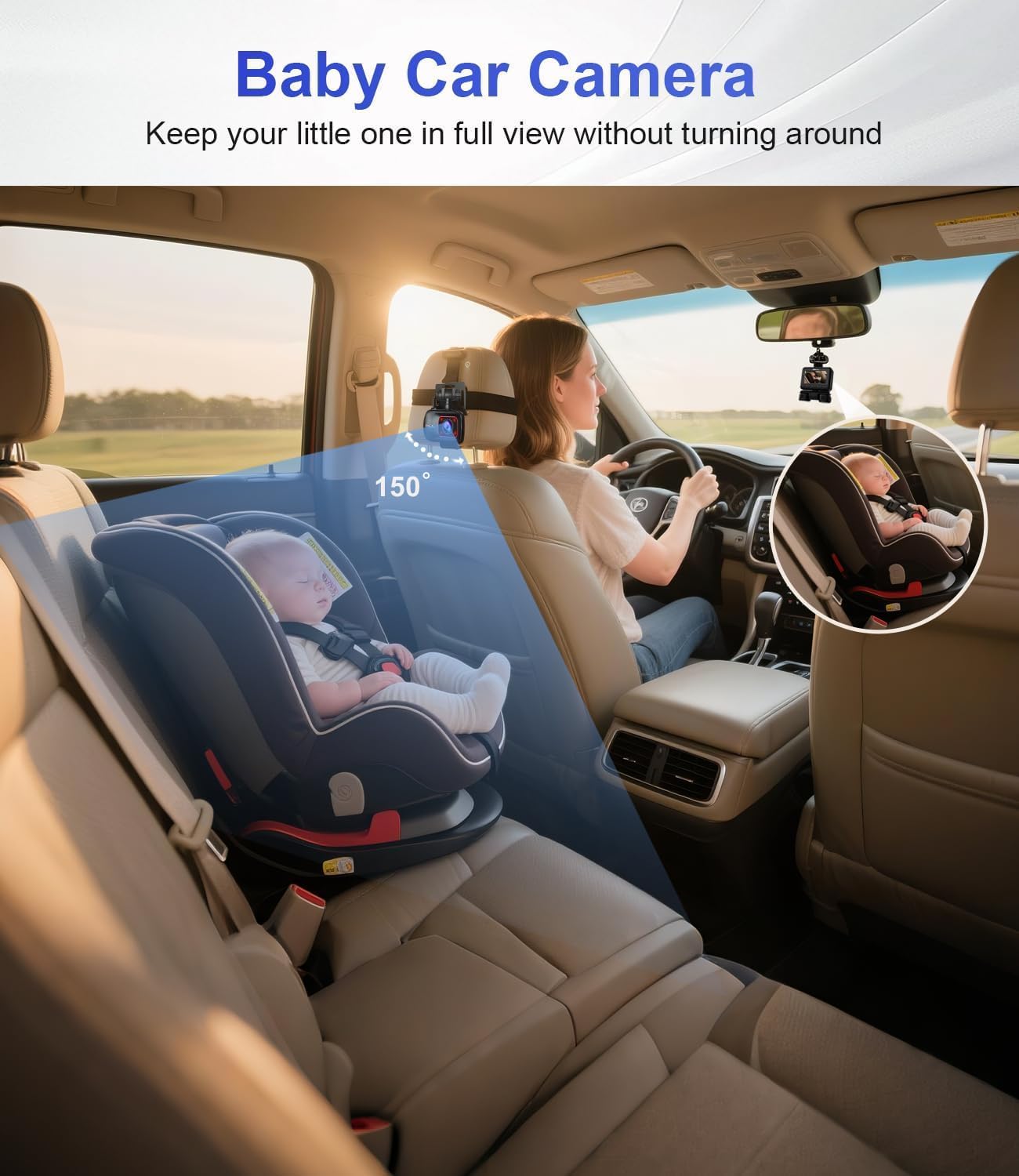
Cabin coverage on the D9pro: the dedicated baby monitor camera records the rear seat while the road channels keep recording.
Have Questions or Need More Details?
Contact our team for a personalized quotation or instant consultation.
Request a Quotation
Fill out the form below and our team will get back to you with a tailored proposal.
WhatsApp Direct Chat
Prefer to chat in real-time? Message us on WhatsApp for instant assistance & quick answers.
- Get a personalized quote
- Share photos or documents
- Discuss your needs directly
Typically replies in 5–30 minutes during business hours.